The Glass Sky Manifesto: Why Every Roof Should Be a Farm
Vegetables are weak. Nature is violent. And our current solution—poisoning the earth to keep the salad alive—is moronic inefficient.
I have watched a tomato plant die. Not from neglect, but from assault. In the Indonesian rainy season, the rain doesn’t just fall; it hammers. It is an artillery barrage. I’ve seen healthy potato plants physically smashed into the mud, their leaves torn, their stems broken, until they finally succumb to the rot and fungi that thrive in the wet chaos.
Meanwhile, the cassava, the taro, the sugar cane, and the corn stand tall. They don’t care. They are the tanks of the plant world.
This observation led to a radical, possibly insane, idea: We are growing the wrong things in the wrong places.
The Thesis: The Great Agricultural Divorce
We are trying to grow fragile, high-maintenance divas (lettuce, tomatoes, peppers) in the open battlefield of nature. To keep them alive, we deploy chemical warfare: herbicides, pesticides, fungicides. We scorch the earth so a salad can live.
The Solution:
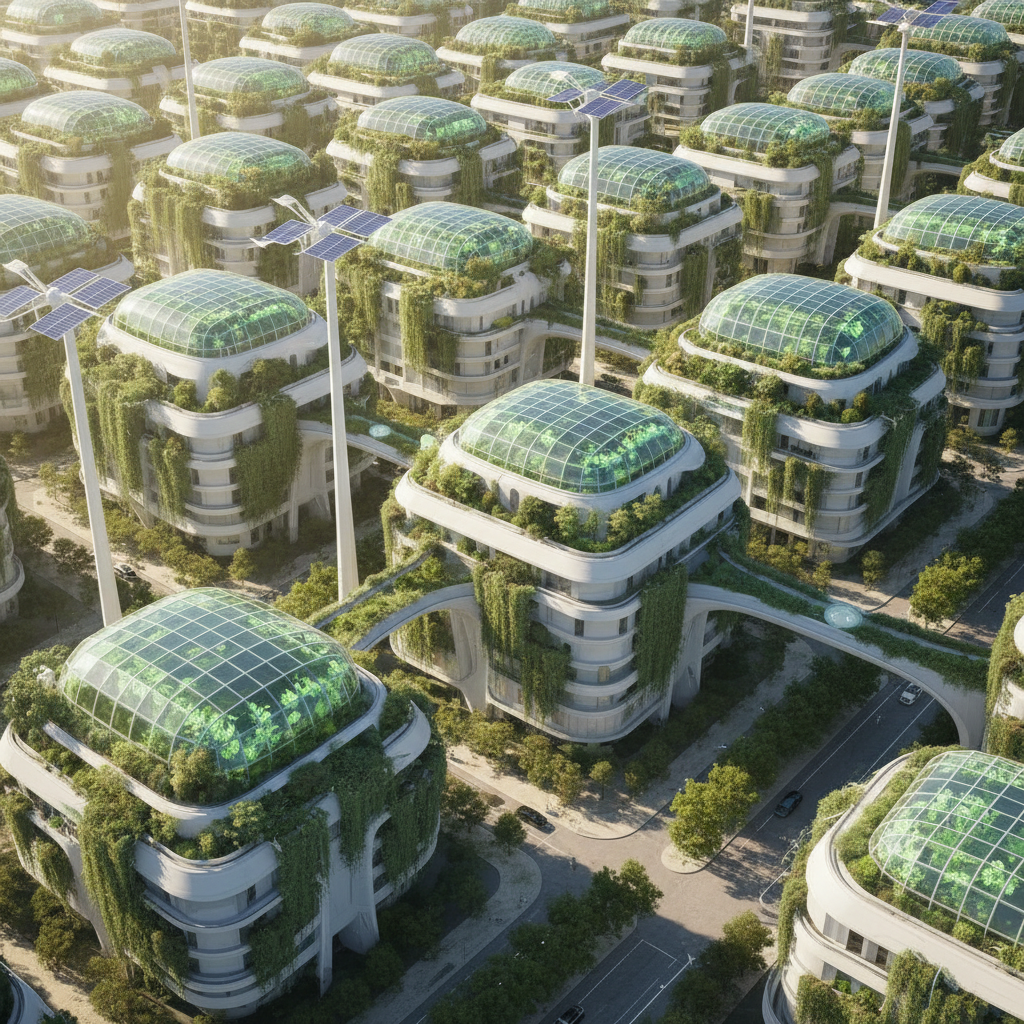
- The City (The Greenhouse): Every roof becomes transparent. Every city becomes a controlled environment for fragile crops.
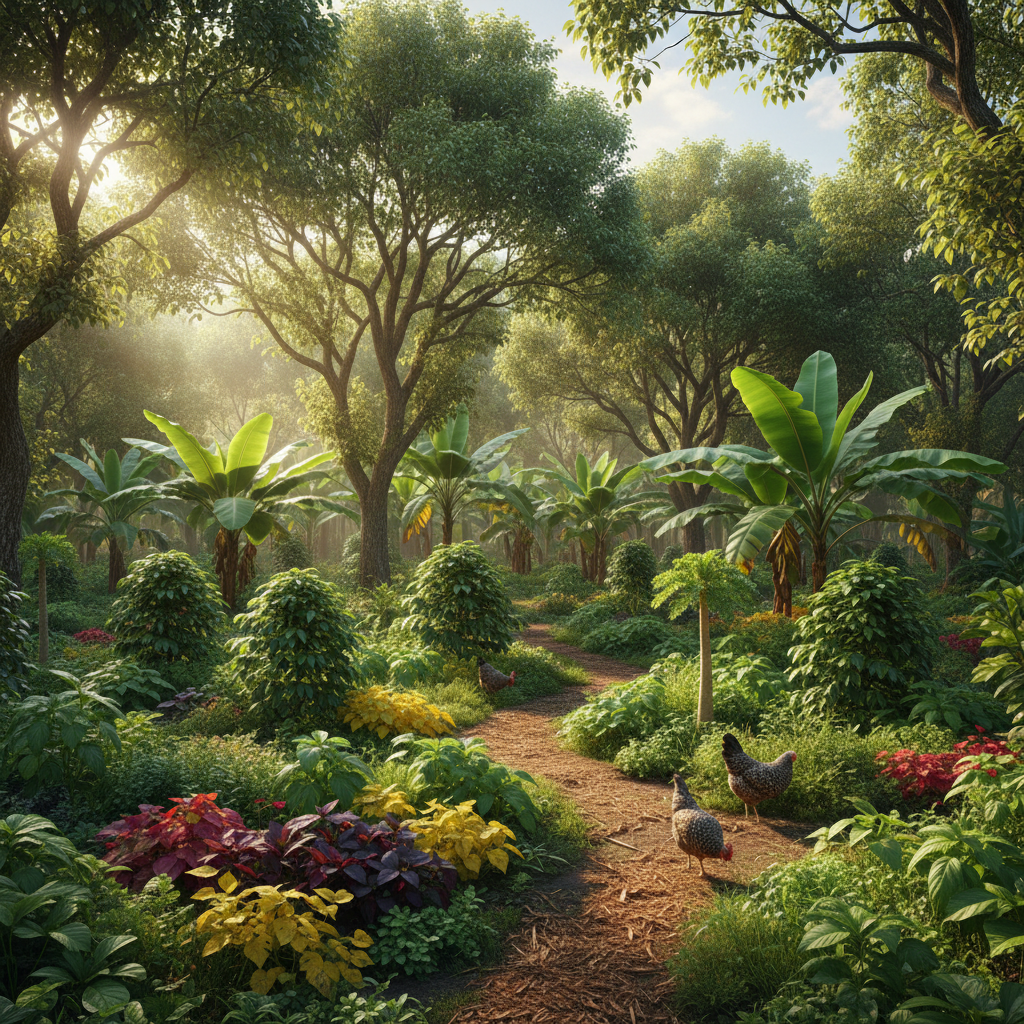
- The Countryside (The Syntropy): The land is returned to the tanks—trees, animals, cereals, and tubers—mixed in a regenerative, self-sustaining system.
The Material: Why Polycarbonate is the Shield
Glass is heavy, expensive, and shatters if you look at it wrong. Plastic film tears if a bird sneezes on it.
Polycarbonate is the answer. It is lightweight. It transmits light beautifully. It is virtually unbreakable—it’s the same material used for riot shields1.
Think about the irony: The material we use to protect police from angry protestors is the same material that can protect our food from an angry planet.
Yes, it scratches. Yes, it’s a petroleum product (don’t @ me). But it filters the hard UVs, it protects the plants from the physical violence of the rain (the #1 vector for fungi), and if you seal the sides with insect nets, you eliminate the bugs without spraying a drop of poison.
The System: Hydroponics is a Trap (Unless…)
I’ve tried hydroponics on a roof. When it works, it’s magic. The growth is explosive. It feels like you’ve hacked nature.
But then the power goes out.
In a pure hydroponic system, if the pump stops, your plants are dead in an hour under the tropical sun. I learned this the hard way. It’s a fragile system dependent on a fragile grid. I stood there, watching my basil wilt in real-time, realizing I had built a system that required 99.99% uptime in a country with 80% uptime.
The upgrade? Substrate Farming. Rice husk, charcoal, manure. A medium that holds water for hours, even days. It’s a hybrid—the control of hydroponics with the resilience of soil. It’s “Low-Tech High-Yield,” which is my new favorite genre.
The Vision: Maison Manendra as the Lab
At Maison Manendra, the roof is transparent. It’s open on the sides to let the wind flow (preventing the “oven effect”), but it keeps the rain off.
Right now, it’s a construction site. But the plan is to turn it into the prototype of this Glass Sky.
Below, on the land, we practice the “Cut and Carry” system. The goats are kept in a barn because if you let a goat loose, it is an agent of pure entropy that will eat your dreams, your trees, and your patience. We bring the grass to them. The chickens and ducks roam free, fertilizing the soil where the tough trees grow.
Devil’s Advocate: “But isn’t covering the world in plastic bad?” The Response: Yes. But destroying the topsoil with monoculture and soaking the water table in Atrazine is worse. Pick your poison. I choose the one that lets me grow spinach without murdering the ecosystem.
The Endgame: Solarpunk Cities
Imagine a city where looking up doesn’t mean seeing grey concrete, but a shimmering canopy of green. Where the “food miles” for your salad is zero because it grew on top of the supermarket. Where the countryside isn’t a chemical-soaked monoculture, but a wild, syntropic forest that feeds us.
It starts with a single sheet of polycarbonate. And maybe a few goats in a barn.
Polycarbonate (PC) is a group of thermoplastic polymers containing carbonate groups in their chemical structures. It’s tough, transparent, and used in bulletproof glass. Basically, it’s transparent steel. ↩︎